
Thursdays In Black
In every country, gender-based violence remains a devastating and persistent reality. Much of this violence happens behind closed doors, and many survivors stay silent out of fear, shame, or concern for their safety. Globally, an estimated 1 in 3 women experience physical or sexual violence in their lifetime, most often at the hands of an intimate partner. In the United States alone, about 1 in 4 women and 1 in 9 men have experienced severe intimate partner violence, highlighting how widespread—and often hidden—this issue is.
How the Campaign Began
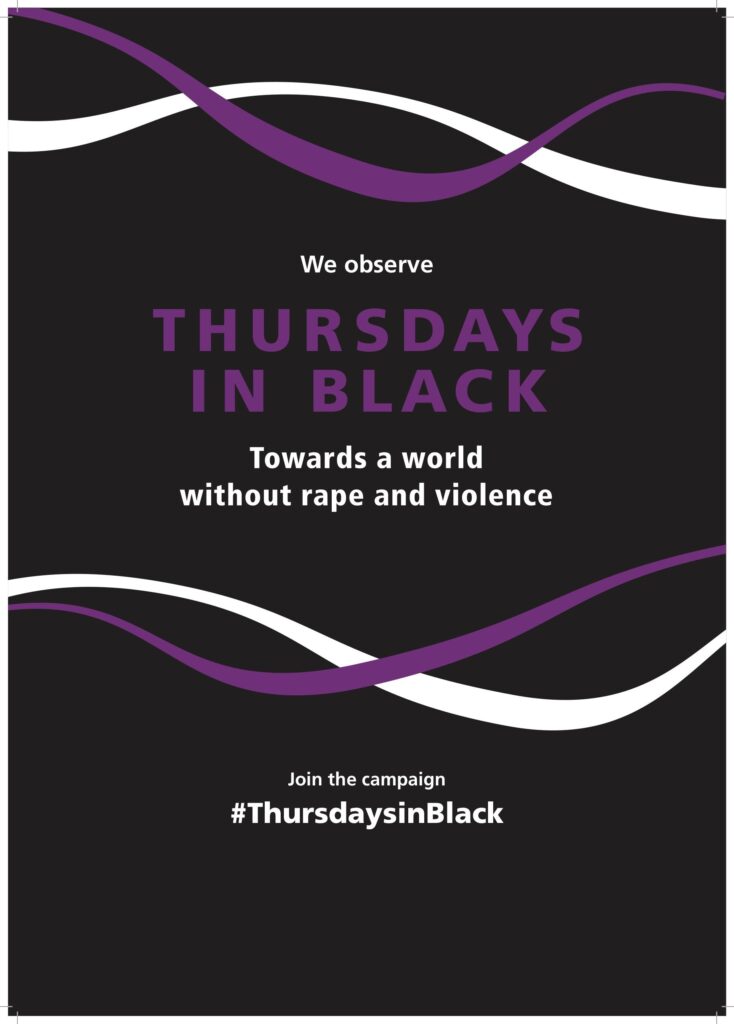
The World Council of Churches (WCC) launched the “Thursdays in Black” campaign in the late 1980s as a nonviolent effort to challenge the cultural norms that enable rape and abuse. The message is simple yet powerful: wear black on Thursdays, and consider wearing a pin to signal your support for a worldwide movement that stands against violence. It’s also a way to honor the resilience of survivors and encourage others to take part.
A WORLD WITHOUT SEXUALIZED VIOLENCE
While the color black has sometimes carried negative associations, in this movement it represents resistance and remembrance. It symbolizes both strength and the collective grief over the ongoing prevalence of sexual and domestic violence. The movement’s message is captured in its call to action: “Towards a world without rape and violence.”
 What You Can Do to Help
If you’re looking to support individuals impacted by domestic or partner violence, here are meaningful ways to get involved:
Learn to recognize the signs of abuse, including physical, emotional, psychological, and financial control.
Listen without judgment—believe survivors and remind them that the abuse is not their fault.
Share hotline numbers and local resources with those who may need them.
Support organizations working to end violence, whether through donations or volunteering (such as local shelters or statewide coalitions).
Advocate for policies that protect survivors, including access to safe housing, legal protections, and prevention programs.
Offer practical help—transportation, childcare, or simply being a safe, supportive presence.
Raise awareness by participating in campaigns like Domestic Violence Awareness Month in October.
National Domestic Violence Hotline
1‑800‑799‑7233 (SAFE) for immediate, confidential support across all states